


When it comes to energy efficiency upgrades under Italy’s Superbonus 110% scheme, many condominium projects run into legal and practical roadblocks. One common situation: a condominio garage di proprietà nega autorizzazione cappotto Superbonus 110—a private garage owner within a condominium refuses to authorize thermal insulation (cappotto termico) that would affect their property. This raises critical questions about ownership rights, collective decisions, and access to incentives.
This article breaks down what happens in such cases, the legal framework, and possible solutions.
Understanding the Superbonus 110 and the Thermal Insulation (Cappotto) Requirement
The Superbonus 110% is an Italian government incentive that allows homeowners to deduct 110% of expenses related to specific energy efficiency and seismic improvements. One of the main interventions covered is the cappotto termico or external wall insulation.
For condominiums, applying this insulation often involves the external surfaces of the entire building—including private garages that are part of the overall structure.
The Legal Conflict: When a Private Garage Owner Blocks the Project
Private vs. Common Property
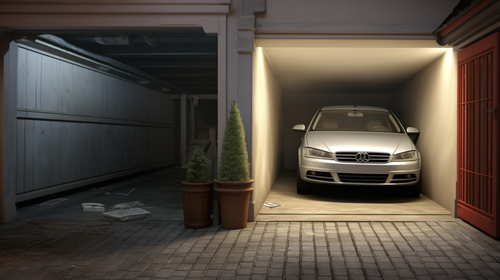
In many cases, the external walls of private garages are part of the common façade. Even if the garage is privately owned (di proprietà esclusiva), its outer structure may legally be considered part of the condominium’s shared elements. This distinction is crucial in determining whether an individual owner can lawfully block energy upgrades.
However, disputes arise when:
- The garage owner argues that the intervention directly affects their property.
- The cappotto may reduce accessibility or interfere with the structural elements they maintain.
- There’s no clear agreement within the condominium assembly.
Thus, the headline case—condominio garage di proprietà nega autorizzazione cappotto Superbonus 110—illustrates a legal grey area that courts and legal experts are increasingly being asked to clarify.
What the Law Says About Authorization and Majority Voting
Italian Civil Code and Condominium Regulations
Under Art. 1120 of the Italian Civil Code, changes to common areas must be approved by the condominium assembly. For Superbonus works, a simple majority vote is sufficient under Law Decree 34/2020 (the “Decreto Rilancio”), provided that the interventions are on common parts of the building.
If the external garage wall is part of the common structure, a garage owner cannot veto the insulation alone. However, if the wall belongs exclusively to them, and the insulation would reduce usable space or affect access, their consent may be required.
In summary:
- Common walls = majority vote governs.
- Private walls = owner’s approval may be necessary.
This nuance lies at the heart of many disputes where a condominio garage di proprietà nega autorizzazione cappotto Superbonus 110.
Recent Court Rulings and Legal Precedents
Italian case law is starting to shape clearer rules around these scenarios.
Notable Judgments
- Tribunale di Roma, 2022: Ruled that a garage owner could not block insulation if the wall were part of the condominium’s common envelope, even if used exclusively by them.
- Corte di Cassazione, 2023: Emphasized that energy improvements serving the building as a whole take precedence unless they cause disproportionate damage to individual units.
These cases highlight that while individual property rights are protected, the collective benefit of energy efficiency often prevails, especially under government-incentivized schemes.
How to Handle Objections: Practical Solutions for Condominiums

Mediation and Technical Assessment
If a garage owner refuses authorization, the condominium administrator should:
- Obtain a technical report confirming whether the wall is common or private.
- Hold a condominium assembly vote with proper legal documentation.
- Engage in mediation with the dissenting party to explore solutions like reduced thickness insulation or alternate placements.
Legal Action as a Last Resort
Suppose mediation fails and the project is deemed legal under current laws. In that case, the condominium may take the owner to court to override the refusal—especially when public incentives are at risk.
Financial and Timeline Consequences of a Blocked Superbonus Project
When a condominio garage di proprietà nega autorizzazione cappotto Superbonus 110, the entire project may be:
- Delayed, risking loss of access to the 110% benefit.
- Redesigned, leading to increased costs or reduced efficiency.
- Abandoned, especially if the garage is in a key location, like a corner or base of the building.
Delays can also affect contracts with contractors, deadlines with ENEA (Italian National Agency for New Technologies), and compliance with regional energy standards.
Tips for Avoiding This Problem in Future Projects
- Clarify property boundaries in advance—get a technical and legal opinion.
- Engage all owners early, especially those with private garages or commercial units.
- Use professional condominium administrators experienced with Superbonus projects.
- Communicate openly about benefits and potential alternatives for sensitive areas.
Conclusion: Balancing Individual Rights with Collective Good
Cases where a condominio garage di proprietà nega autorizzazione cappotto Superbonus 110 are becoming more common as buildings across Italy attempt to modernize. While private property rights must be respected, the law increasingly favours collective improvements—especially when tied to public funding.
Navigating these conflicts requires clear legal understanding, good communication, and, sometimes, judicial resolution. The key is preparation, transparency, and balancing energy efficiency with property boundaries.
Stay informed with the latest news and updates on techspare