


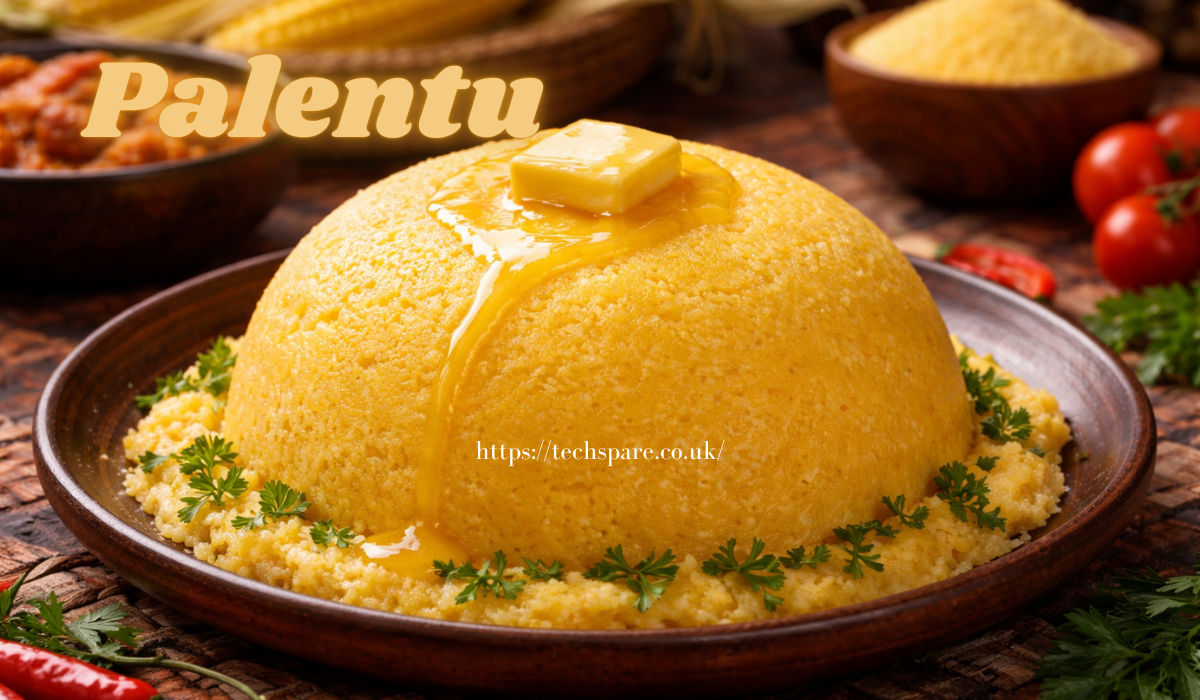
In the heart of traditional cuisine and rural heritage lies a dish known not just for its flavor but for its deep-rooted significance—palentu. Known across various cultures and regions, palentu is more than just food; it’s a reflection of community, survival, and adaptability. Often misunderstood or overshadowed by more globally marketed dishes, palentu holds a special place in the kitchens and hearts of those who understand its value.
Let’s explore the multifaceted identity of palentu—its origins, preparation methods, cultural significance, evolution, and its place in the modern world.
What is Palentu?
Palentu is a hearty, rustic dish traditionally made from ground cornmeal. It is cooked slowly in water or broth until it thickens into a creamy or firm consistency, depending on preference or regional variation. It can be served soft, almost like porridge, or allowed to set and sliced into cakes for grilling or frying.
What sets palentu apart is not just its ingredients but the methodical patience required in its preparation—a process that transforms something simple into something deeply satisfying.
Roots That Run Deep: The Origins of Palentu
Long before modern kitchens and convenience meals, palentu was a staple food for rural communities, especially among farmers and shepherds. Though closely associated with certain European regions, particularly Northern Italy, the concept of a cornmeal-based dish has crossed continents and generations, adapting to whatever culture embraced it.
But here’s the twist—palentu predates the arrival of corn in Europe. Before maize became a dominant crop after the Columbian Exchange, similar porridge-like meals were made from spelt, barley, or millet. The arrival of corn revolutionized the dish, making it cheaper, more filling, and widely accessible.
The Heart of the Home: How Palentu Is Made
There’s a rhythm to making palentu—an almost meditative stirring, often lasting an hour or more. The traditional method involves boiling water with a pinch of salt, slowly pouring in coarse cornmeal, and stirring continuously to avoid lumps.
Key components of classic palentu preparation include:
- Coarse yellow cornmeal – the foundation of texture
- Wooden spoon (or “tarello”) – traditionally used for stirring
- Copper cauldron – used in rural kitchens for even heat
- Long cooking time – usually 45 to 90 minutes
A common belief is that true palentu must be stirred by hand, with love and patience. Some even say the taste is different depending on who makes it—a sentiment that turns cooking into an art form.
Regional Variations of Palentu
No two palentus are quite the same. Just as languages shift from valley to valley, palentu adapts to local ingredients and customs.
- Northern Italy (Polenta) – Perhaps the most widely recognized form. Often served soft with stews, or sliced and grilled.
- Corsica – Uses chestnut flour for a sweeter version, a nod to the island’s abundance of chestnut trees.
- Eastern Europe – In Romania, Moldova, and Ukraine, cornmeal mush (mămăligă) is similar to palentu, eaten with cheese, sour cream, or meats.
- South America – Echoes of palentu exist in Brazilian cuisine, where cornmeal dishes are paired with beans or grilled meats.
- Africa – Though not called palentu, dishes like sadza (Zimbabwe) or ugali (Kenya) share a similar cornmeal base and cultural importance.
What unites these variations is the common thread of simplicity and sustenance, often served as a base to carry more flavorful toppings or accompaniments.
Palentu and Cultural Identity
In some regions, palentu was once seen as “peasant food”, consumed daily by those who worked the land. It represented frugality, resilience, and the ability to nourish large families on a tight budget. But over time, the narrative has shifted.
Today, palentu is celebrated in festivals, featured in gourmet restaurants, and championed by chefs who recognize the dish’s depth and heritage. It’s been reclaimed, not just as a nostalgic throwback, but as a culinary anchor of identity.
Families pass down their unique methods of preparing palentu, each with its tweaks—adding milk instead of water, including herbs, cheese, or butter. The dish becomes a story on a plate, tied to generations past.
Modern Twists on a Traditional Dish
Though traditional palentu still thrives, the modern kitchen has brought innovations that elevate and reinterpret it. Creative chefs and home cooks are finding new ways to present palentu, making it relevant for today’s palate.
Some of the most striking modern variations include:
- Palentu fries – Thick slices of firm palentu, seasoned and deep-fried to crispy perfection.
- Palentu cakes with truffle oil – Served as starters in upscale restaurants.
- Palentu with wild mushrooms – A rich, earthy combination that highlights forest flavors.
- Palentu pizza base – Gluten-free and grainy-textured, topped with vegetables or meats.
- Vegan palentu bowls – Made with plant-based broths and topped with roasted vegetables and tahini drizzle.
The reinterpretation of palentu proves its versatility. It can be rustic or refined, humble or haute.
Health Benefits of Palentu
Apart from its cultural and culinary significance, palentu also offers nutritional benefits. It is naturally gluten-free, making it suitable for those with celiac disease or gluten sensitivities. While low in protein, it’s often paired with legumes, cheese, or meats to form a complete meal.
Health highlights of palentu include:
- High in complex carbohydrates – Provides slow-releasing energy
- Rich in fiber – Especially when made from whole cornmeal
- Low in fat – Unless enriched with butter or cheese
- Naturally gluten-free
- Iron and B-vitamin content – Particularly in stone-ground varieties
The nutritional profile varies depending on how it’s prepared, but at its core, palentu is a filling and wholesome dish with minimal processing.
Palentu in Daily Life: More Than a Meal
For many, palentu is tied to memory—a grandparent stirring the pot, the smell of corn wafting through a stone kitchen, the sound of bubbling broth. It’s food that invites gathering, not rushed consumption.
Some rural households still maintain the ritual of communal palentu-making, especially on cold winter days. Served on a large wooden board, topped with sauces, meats, or melted cheese, it becomes a shared centerpiece, inviting conversation and laughter.
In some Alpine regions, palentu is even used in communal storytelling traditions, where elders share tales while the pot simmers—proof that food can nourish the spirit as much as the body.
Economic and Agricultural Connection
Corn is a staple crop in many parts of the world, and palentu’s reliance on cornmeal links it directly to agriculture. In self-sustaining farms, families often grow their own corn, dry it, and grind it into meal, creating a closed-loop food system that reduces waste and strengthens local economies.
Moreover, some slow-food advocates have begun reintroducing ancient maize varieties to make palentu with richer colors, deeper flavor, and greater nutritional value. This has sparked a movement among artisanal farmers and chefs to revive heritage foodways, with palentu as a symbol of that mission.
Why Palentu Endures
In an age dominated by fast food and artificial flavors, the enduring presence of palentu is almost rebellious. It reminds us of a time when food demanded presence, when meals were moments of gratitude and togetherness.
Palentu is not just something you eat—it’s something you create, and that act of creation is deeply personal. It reflects patience, care, and the honoring of those who came before.
How to Bring Palentu Into Your Kitchen
If you’ve never made palentu, start simple. Use coarse-ground cornmeal, water, and salt. Stir gently. Feel the texture change. Observe the transformation from grain to gold. Once you master the base, begin experimenting—cheese, herbs, caramelized onions, or roasted garlic.
Pro tips for making palentu unforgettable:
- Use stock or broth instead of water for deeper flavor
- Add aged cheeses like Parmesan, Pecorino, or local farm cheeses
- Cook low and slow—do not rush
- Once cooked, let it rest before serving for better texture
Bring friends or family into the process. Let them stir. Let them taste. In doing so, you’re not just cooking—you’re connecting.
Conclusion: Palentu as Living Tradition
In its humble appearance, palentu carries the richness of time. It is a testament to how simple ingredients, given care and respect, can become a canvas for tradition, innovation, and nourishment.
Whether served on a mountainside wooden table or plated in a modern restaurant, palentu holds its own—a dish that quietly tells stories, feeds souls, and bridges generations.
So next time you’re craving something genuine, turn to palentu. Let it simmer, let it speak, and let it remind you that the most meaningful food is often the simplest.